A sports bra is not just kit for elite athletes. It is the single piece of clothing that decides whether moving your body feels comfortable or feels like a battle.
If you have ever cut a run short, skipped a class, or held back in the gym because of the way your body moved, the problem was almost certainly your bra rather than your fitness. Proper support changes that, and the difference is bigger than most women expect. The science behind it is well worth knowing, and once you have seen it, you will understand why the right sports bra matters whatever your size or your sport.
This guide covers what a sports bra actually does, what the research shows about breast movement, the seven real benefits worth knowing, and how to match a bra to the way you move. There is a right sports bra for every body and every activity, and finding it is more straightforward than it looks.
In short
Why a sports bra is worth it
The benefits in brief. The rest of this guide explains each one and helps you choose.
- It limits breast movementBreasts have no internal muscular support of their own, so the bra does the work.
- It protects the skin and ligamentsLess movement means less strain on the tissue that gives breasts their shape.
- It reduces exercise-related breast painOne of the biggest reasons women hold back from activity, and a fixable one.
- It works with you, not against youTechnical fabrics manage sweat and heat so you stay drier and cooler.
- It comes in a support level for every activityFrom gentle yoga to high-impact running, matched to how much you move.
What is a sports bra
A sports bra is a bra built for the extra demands placed on your body when you move more than your day-to-day routine. Like an everyday bra it comes in a full range of sizes, fastenings, colours and cup styles, but the design is focused on one job: keeping your breasts supported and comfortable while the rest of you is in motion.
If you are new to this, do not overthink your first one. You need the right size, a support level that matches your activity, and a comfortable fit. The sections below walk you through each of those in plain terms, so you can choose a first sports bra with confidence.
Why wearing a sports bra matters
Here is the part most women are never told. Breasts contain fatty tissue, milk ducts and a network of connective ligaments, but very little muscle. They have almost no internal support of their own. The skin and those ligaments are the only thing holding them in place, and when you move, they move.
Up and downThe largest movementSide to sideSways with each stepIn and outForwards and back
During exercise the breast moves in three directions at once. A sports bra is designed to control all three.
Research from the University of Portsmouth, home to the world-leading Research Group in Breast Health, has measured exactly what happens. Each breast weighs around half a kilogram on average, and during high-impact activity it can travel a surprising distance in every direction. Left unsupported, that repeated movement can stretch the skin beyond its natural elastic range, which is what leads over time to lasting changes in shape.
Up to 74% Reduction in breast movement with a well-fitting sports bra, compared with no bra
~0.5kg The average weight of a single breast, with almost no muscle to support it
3 ways The directions a breast moves at once during exercise, all of which a sports bra controls
That 74% figure is the heart of it. A good sports bra is not a comfort upgrade you can take or leave. It is a piece of protective equipment that keeps the structure of the breast safe, in the same way a running shoe protects your feet and joints. Whatever your size, that protection matters.
Physical discomfort from a poorly fitting sports bra is one of the biggest reasons women avoid exercise altogether. Get the support right, and that barrier simply disappears.
Drawing on University of Portsmouth breast health research
The seven benefits of a sports bra
The science explains why support matters. Here is what that support actually gives you, day to day.
1
Support and less movement
The core benefit. Your breasts stay held and steady while you move, so nothing jiggles, sways or bounces in a way that distracts you or holds you back.
2
Less exercise-related pain
By keeping everything in place, a sports bra removes the soreness that can make activity uncomfortable. For many women this is the difference between taking part and sitting out.
3
Sweat and temperature control
Technical fabrics draw moisture away from your skin and improve airflow, so you stay drier and cooler through a workout. Lighter versions even hold a little warmth for chillier days.
4
A support level for every activity
From light support for yoga and pilates to high-impact support for running, you can match the bra precisely to how much movement your activity involves.
5
Handy hidden storage
Many sports bras include a small built-in pocket, just right for a key, an earbud case or a bank card, so you can head out without carrying a bag.
6
Designs you will want to wear
Sports bras come in every colour and pattern, from clean block shades to bold prints. New kit that you like the look of is its own small motivation.
7
Comfortable enough for every day
Wider straps, even coverage and soft, smooth fabrics make a good sports bra so comfortable that plenty of women happily wear theirs on rest days too.
If support has been the barrier
For a larger-busted woman, a sports bra is not a nice extra. It is often the deciding factor in whether exercise feels possible at all. If you have felt the bounce, the ache or the self-consciousness, and quietly stepped back from activities because of it, the issue was never your body. It was a lack of support built for your shape.
The good news is direct: proper high-support sports bras are made in real fuller-bust sizes, and they are designed for a larger bust rather than scaled up from a small one as an afterthought. Encapsulation styles in particular hold and support each breast individually, which is what makes high-impact activity comfortable at a G, H, J or K cup. The right one takes the barrier away completely, so you can move freely and without holding back. For more on this, our guide to the best sports bras for saggy breasts is worth a read.
Compression or encapsulation
Two words you will see again and again. Here is the plain difference, and which suits you.
Compression 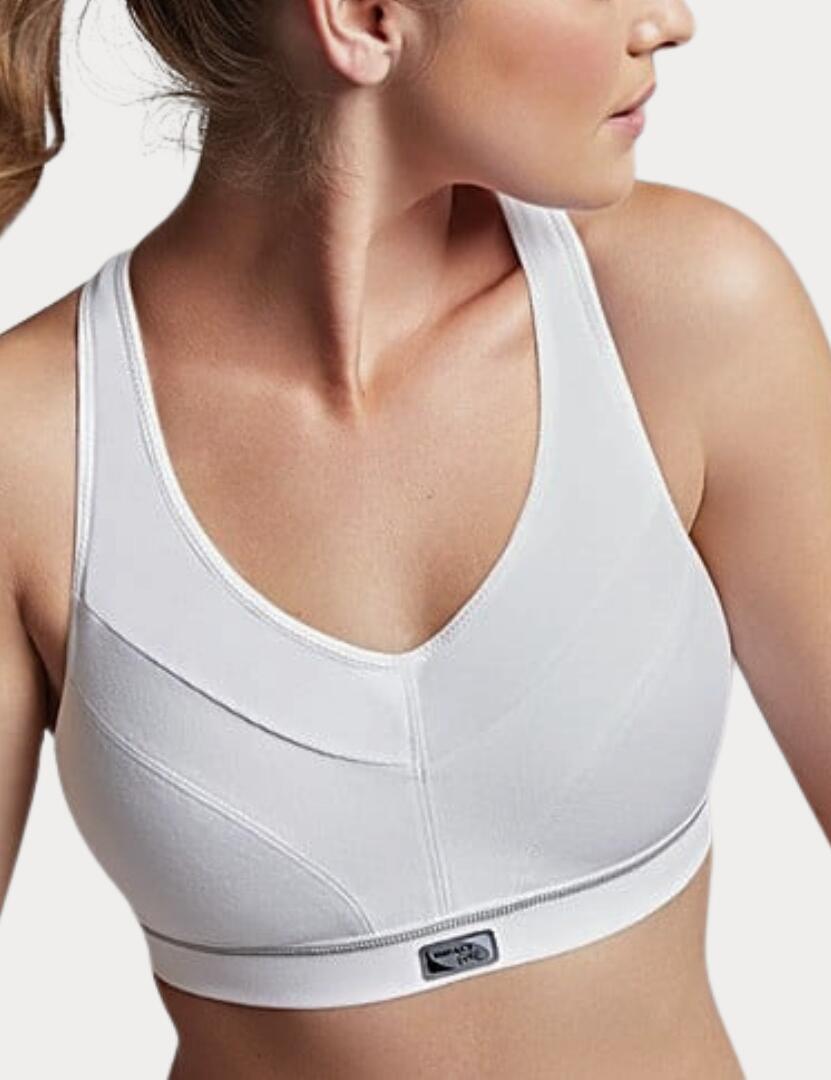
Compression
Shaped like a crop top, it holds the breasts gently against the chest to reduce the force of movement. Simple, light and easy to wear.
Best for: smaller busts, and low to medium-impact activity like yoga, pilates or walking.
Encapsulation 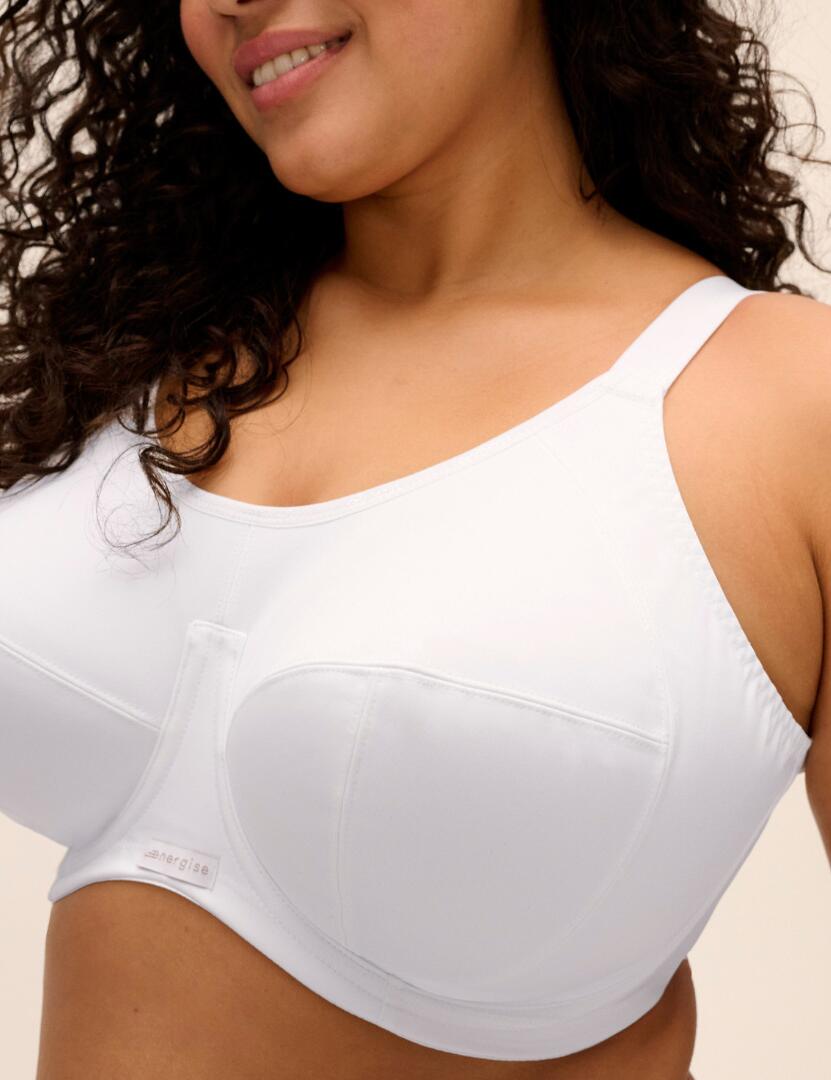
Encapsulation
Has two separate cups like a regular bra, supporting each breast individually with the extra strength a sports bra provides.
Best for: larger busts, and medium to high-impact activity like running and classes.
Both styles give far more support than a regular bra, and both work to control breast movement. The choice comes down to your bust size and your activity. If you are fuller-busted or doing anything high-impact, encapsulation will almost always serve you better. Some women size down a band when buying a sports bra for a snugger fit, but because brands size differently, there is no substitute for trying a few and seeing what feels right.
Matching support to your activity
Getting the support level right is simple once you know the rule: match the bra to how much your body moves in your chosen activity. A runner needs far more support than someone heading to a yoga class. Use the quick guide below to see where your activity sits.
Which support level do you need
Tap the activity closest to what you do most.
My main activity is mostly:
Tap an activity above to see the support level that suits it.
A comfortable choice for every day
A well-made sports bra is comfortable enough that many women wear theirs well beyond the gym.
Finding the right sports bra can feel a bit like finding the perfect pair of slippers. Because of the way they are built, with wider straps, even coverage and soft, smooth fabrics chosen to avoid rubbing, sports bras can be more comfortable than a regular bra. Plenty of women find theirs becomes a favourite for everyday wear, rest days included. If comfort is high on your list, that is one more reason a good sports bra earns its place.
Looking after your sports bra
A sports bra works hard, and a little care keeps it performing for longer. The fabric and elastic are doing a real job, so protecting them protects your support.
- Do the hooks up before washing. This stops them catching on the drum and bending out of shape, which is one of the quickest ways to wear a bra out.
- Follow the care label. Most sports bras do not need a special wash and can go in with the rest of your kit at the recommended temperature.
- Always air dry. Never tumble dry. Heat breaks down the technical fabrics and can loosen any wiring.
- Rotate between a few. Letting the elastic recover between wears keeps every bra supportive for longer.
When to replace it
A sports bra wears out gradually, and a worn one is no longer protecting you properly. Check yours every six to twelve months, and replace it when you notice any of these:
- The support has faded. It no longer holds you the way it did when it was new.
- The fit has changed. There is spillage over the cup or band, or the band has stretched and rides up.
- The fabric is tired. It has lost its stretch, or no longer feels and smells fresh after washing.
If you exercise often, it can be worth keeping two or more sports bras in rotation, so there is always a fresh one ready and each gets a rest between wears.
Frequently asked questions
Do sports bras actually make a difference?
Yes, and the difference is measurable. Research from the University of Portsmouth has found that a well-fitting sports bra can reduce breast movement by up to 74% compared with wearing no bra. Because breasts have almost no muscle of their own to support them, that reduction protects the skin and ligaments and makes exercise far more comfortable.
Is a sports bra good for a larger or heavier bust?
It is especially important for a fuller bust, because larger breasts move more during activity. Look for a high-support encapsulation style, which supports each breast individually, in a real fuller-bust size rather than a small bra scaled up. Worn at a G, H, J or K cup, the right one makes even high-impact exercise comfortable.
What is the difference between compression and encapsulation?
A compression bra is shaped like a crop top and holds the breasts gently against the chest. It suits smaller busts and lower-impact activity. An encapsulation bra has two separate cups and supports each breast individually, which suits larger busts and higher-impact activity. Both give more support than a regular bra.
Can I wear a sports bra every day?
Yes. A well-made sports bra has wider straps, even coverage and soft fabrics, so many women find it comfortable enough for everyday wear. As long as it fits well and still gives you the support you need, there is no reason not to wear it beyond the gym.
How often should I replace my sports bra?
It depends on how often you wear it and how intense your activity is. As a guide, check yours every six to twelve months. Replace it when the support has faded, the band has stretched, there is spillage at the cup or band, or the fabric has lost its stretch and freshness.
How should I wash a sports bra?
Follow the care label, which usually allows a normal wash with the rest of your kit. Fasten the hooks first so they do not catch and bend in the machine, and always air dry rather than tumble drying, as heat damages the technical fabrics and can loosen any wiring.