Breasts soften and drop for all sorts of ordinary reasons, pregnancy and feeding, weight going up or down, the years, and plain genetics and gravity. It is one of the most normal things a body does, and it is nothing to fix or hide. What it does change is what you need from a sports bra, because breasts that have less natural firmness rely more on the bra to hold and protect them when you move. Get that right and exercise stays comfortable, and you are looking after the shape you have for the future too.
Breasts have very little support of their own. The skin and a network of internal ligaments do the holding, and high-impact movement pulls on both. The job of a good sports bra is to take that strain instead, so the two things to look for are enough support for what you do, and a shape that lifts rather than flattens.
The short version
What to look for
Four things separate a sports bra that holds from one that just covers.
- Encapsulation, not compression. Separate shaped cups lift and hold each breast, where a flattening band just presses a softer bust down.
- The right impact level. Match the support to the activity, high-impact for running, medium for the gym.
- A firm band. As with any bra, the band does most of the work, so it should sit snug and level.
- Minimal bounce. The test is simple, jump on the spot, and there should be very little movement.
Why support matters more once breasts have changed
Because breasts are held mostly by skin and ligaments, repeated bounce during exercise pulls on the very things that keep them lifted. Once those are stretched they do not spring back, so limiting the movement is how you protect the shape you have and slow further change. A supportive sports bra can cut that movement dramatically compared with an everyday bra or none at all. If your breasts have already softened, this matters more, not less, because there is less natural firmness resisting the bounce.
Support during exercise is not vanity. It is the single most useful thing you can do to protect breasts that have already softened.
Encapsulation or compression, which to choose
This is the choice that matters most for a softer or fuller bust. A compression bra pulls both breasts in against the chest, which works on a smaller, firmer bust but on a softer one just flattens and can feel unsupportive. An encapsulation bra has a separate shaped cup for each breast, so it lifts and holds them in a natural position. For a bust that has changed, encapsulation nearly always feels better and holds better, and many high-support styles combine both.
CompressionPresses flatEncapsulationLifts and holds each
Compression flattens the bust against the chest. Encapsulation gives each breast its own cup, which lifts and supports a softer shape far better.
The sports bras that do it best
These are the high-support styles worth starting with, all stocked in fuller cup sizes. Pick by your activity and how much support you want.
Maximum support 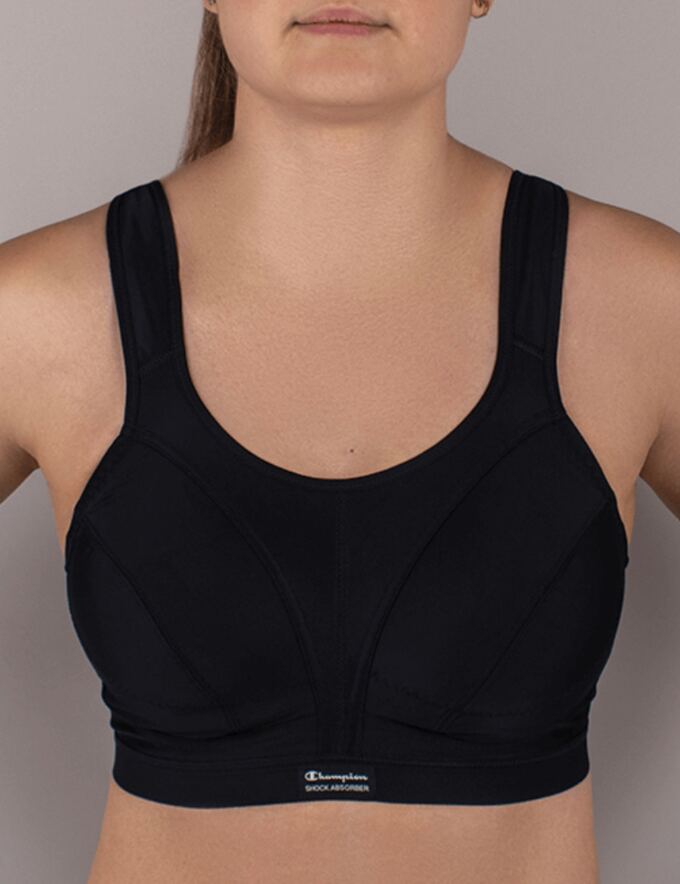
Shock Absorber
The name most fitters reach for when bounce is the problem. Shock Absorber styles are built to cut movement to a minimum, which makes them the go-to for running, HIIT and anything high-impact, and reassuring for a softer bust.
Best for: running and high-impact workouts, and anyone who wants the most support they can get.
Shop Shock Absorber
Lift and shape 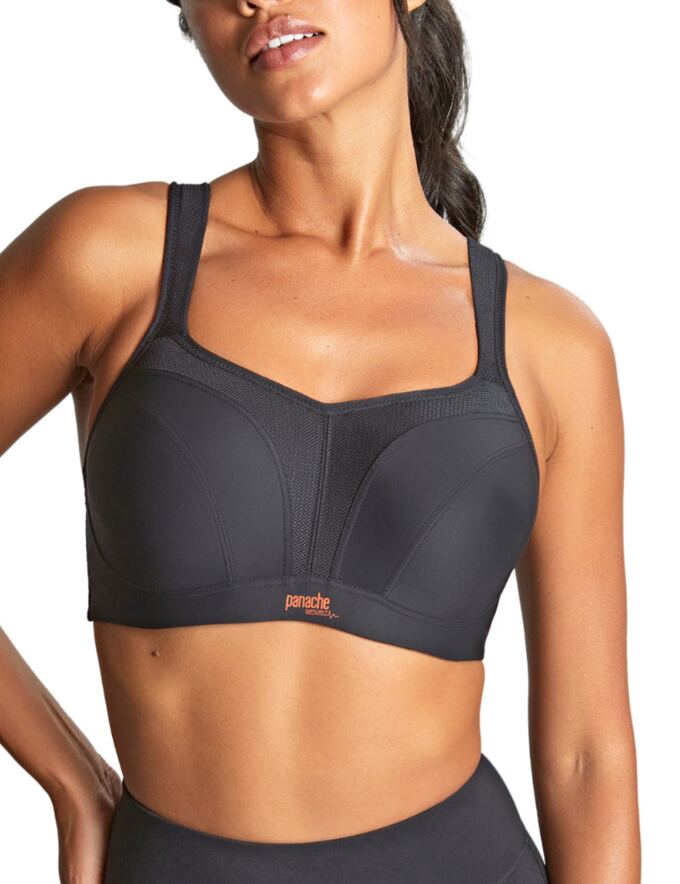
Panache Sport
An underwired encapsulation sports bra, so each breast sits in its own supported cup rather than being pressed flat. That gives a lifted, natural shape as well as high support, which suits a fuller or softer bust well.
Best for: fuller busts that want lift and a defined shape alongside serious support.
Shop Panache Sport
Versatile 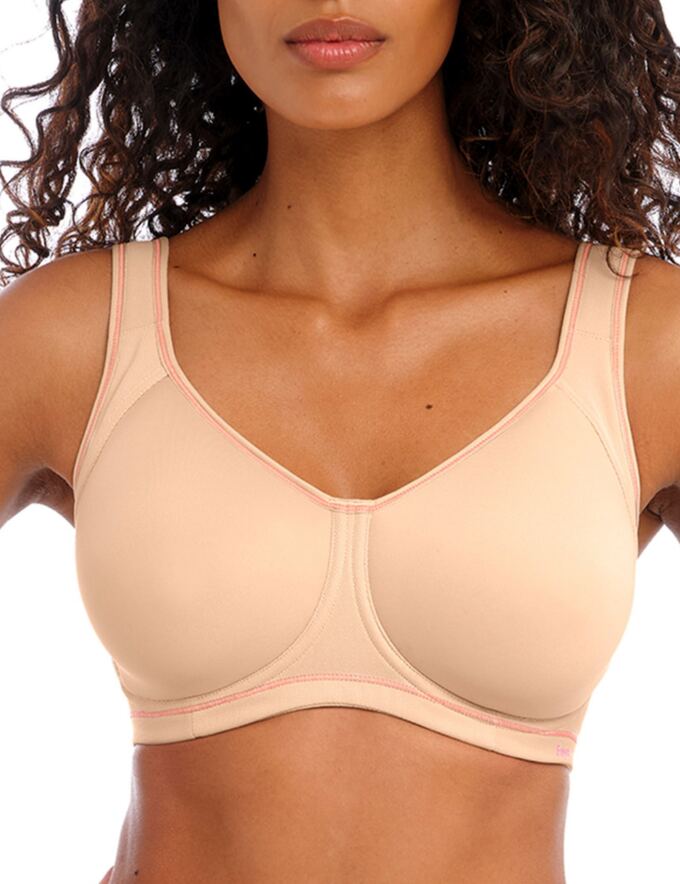
Freya Active
Moulded, encapsulated cups with a sporty look, covering everything from the gym to a run. A good all-rounder if you do a mix of activities and want one supportive bra that lifts and holds through most of them.
Best for: mixed workouts and everyday active wear, with lift built in.
Shop Freya Active
See them all 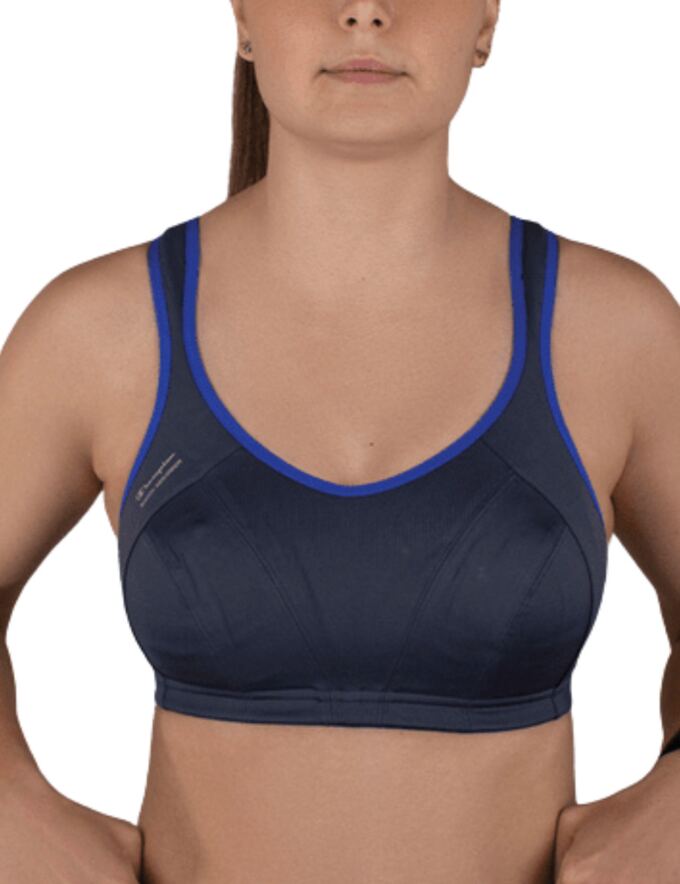
Browse every sports bra
If you are not sure of your impact level or want to compare across brands, the full range is sorted so you can find the right support for whatever you do, in fuller sizes throughout.
Best for: comparing styles and impact levels in one place before you decide.
Shop all sports bras
Getting the fit right
A sports bra should fit more firmly than an everyday one, but the checks are the same. The band sits snug and level around your ribcage and does the holding, the cups contain the whole breast with no spilling over the top or the sides, and the straps stay put without cutting in. Then do the jump test, bounce on the spot for a few seconds, and there should be very little movement. If there is, size down the band or step up the support level rather than tightening the straps.
If you are between sizes or your size has changed, our fitting guide covers the full check and the bra size calculator gives you a starting point in a minute. Sports bras are one of the styles most worth getting measured for.
Which sports bra do you need?
Tell it what you do and what matters most, and it will point you to the right style.
Find your sports bra
Choose the closest match.
Pick an option above for a suggestion.
Common fit problems, and the fix
- You still bounce in it. The support level is too low or the band is too big. Step up to a high-impact style and size the band down.
- It flattens rather than lifts. That is a compression bra doing what compression does. Switch to an encapsulated style with separate cups.
- The band rides up your back. Too loose. A sports band should sit firmly and level, so drop a band size and take the cup up one.
- The straps dig in. The band is not carrying enough of the weight. Fix the band first, and look for wider, cushioned straps.
A supportive everyday full-cup bra is worth having alongside for the rest of the day, so your breasts are held whether you are moving or not.
Common questions
Are sports bras good for breasts that have started to sag?
Yes. A supportive sports bra holds a softer bust in a lifted position during exercise and cuts the bounce that pulls on the skin and ligaments. That both feels better on the day and helps protect the shape you have from further change. Encapsulated styles do this better than flattening compression ones.
What is the best bra to lift sagging breasts?
For exercise, an encapsulated high-support sports bra with separate cups gives the most lift, because each breast is held and supported individually. The lift comes mainly from a correctly fitted band, so getting the size right matters as much as the style. For everyday wear, a structured full-cup bra does the same job.
What is the best bra shape for sagging breasts?
A full, encapsulated cup that covers and supports the whole breast rather than a low-cut or lightly-lined shape. Separate shaped cups lift a softer bust into a natural position, while compression and bralette styles tend to flatten it. Side support helps too, keeping the bust centred rather than letting it drift.
Does exercising without a sports bra make sagging worse?
It can contribute. Breasts are held by skin and ligaments, and repeated bounce during exercise stretches both, which does not fully reverse. A supportive sports bra reduces that movement a lot, so wearing one is a straightforward way to look after your breasts while you stay active.