A big bust does not have to mean sore shoulders and a bra you count down the hours to take off. Most of that comes down to two things, the wrong size and the wrong style, and both are fixable. Proper support is not about a tighter strap. It comes from a firm band and a cup that holds the whole bust, and once you have those, comfort and shape come with it. Here is how to choose, by the thing you most want a bra to sort out.
Whatever the specific problem, the foundation is the same. The band should sit firm and level around your ribcage and do most of the lifting, while the cup contains everything with no spillage or gaping. Get those right and the styles below simply add the finishing touch for your shape.
The short version
What makes a bra supportive
Four things do the heavy lifting, quite literally.
- A firm band that sits level and carries around 80 percent of the weight off your shoulders.
- A full cup that covers and contains the whole bust, so nothing spills over the top or the side.
- Side support inside the cup for a heavier or softer bust, to lift and centre rather than let it drift.
- The right size, since even the best style cannot support you if the band or cup is off.
Where the support actually comes from
The most common mistake is trusting the straps to hold everything, then tightening them until they carve into your shoulders. On a big bust that is the fast route to grooves, aches and a headache. A well-fitted band takes the load instead, sitting firm and level all the way round, which is why a band that rides up at the back is the first thing to fix. The straps are there to guide, not to carry.
Band carries ~80%Straps guide, ~20%
Support is a band job. When the band fits and sits level, your shoulders stop taking the strain.
The supportive styles, by what they solve
Each of these is stocked well past a DD. Pick by the problem you most want sorted.
All-day support 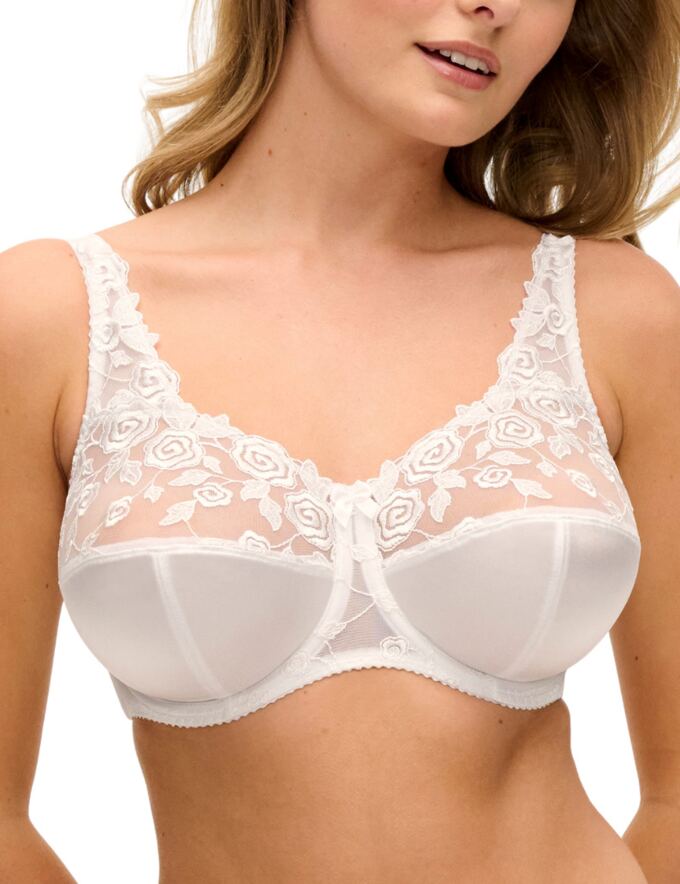
Full-cup bras
The everyday foundation for a big bust. A full cup covers and holds the whole bust on a structured frame, which is what stops the spill and the ache by mid-afternoon. If you buy one supportive style, make it this.
Best for: all-day wear, and anyone who wants to stop the end-of-day shoulder ache.
Shop full-cup bras
Contains spillage 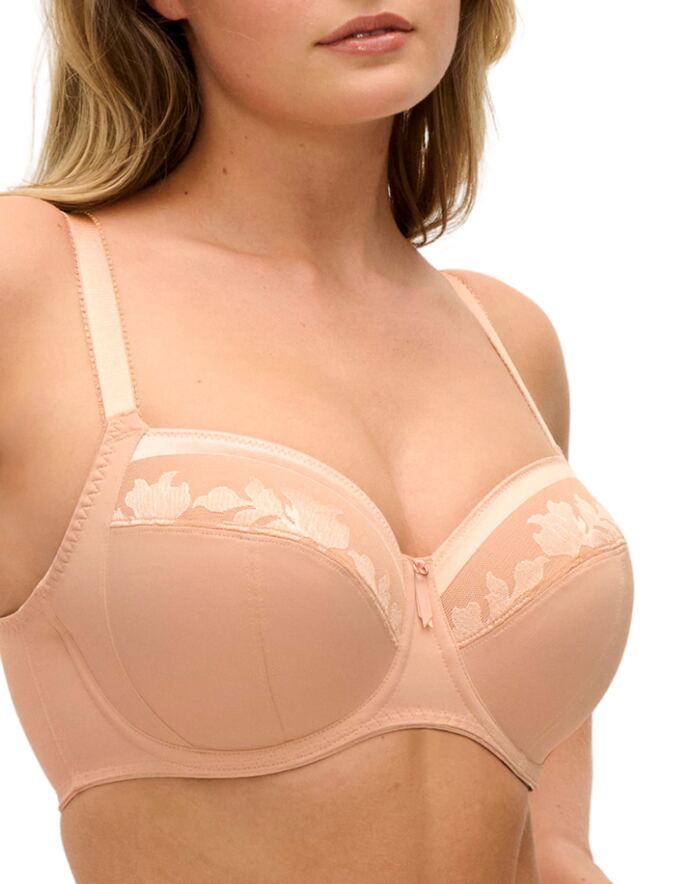
Side-support bras
A panel or sling inside the side of the cup pushes the bust forward and in, so nothing escapes under your arm or drifts to the side when you lie down. It also gives a rounder, more centred shape under clothes.
Best for: spillage at the sides, a softer or fuller-on-the-bottom shape, and a centred look.
Shop side-support bras
Smooth support 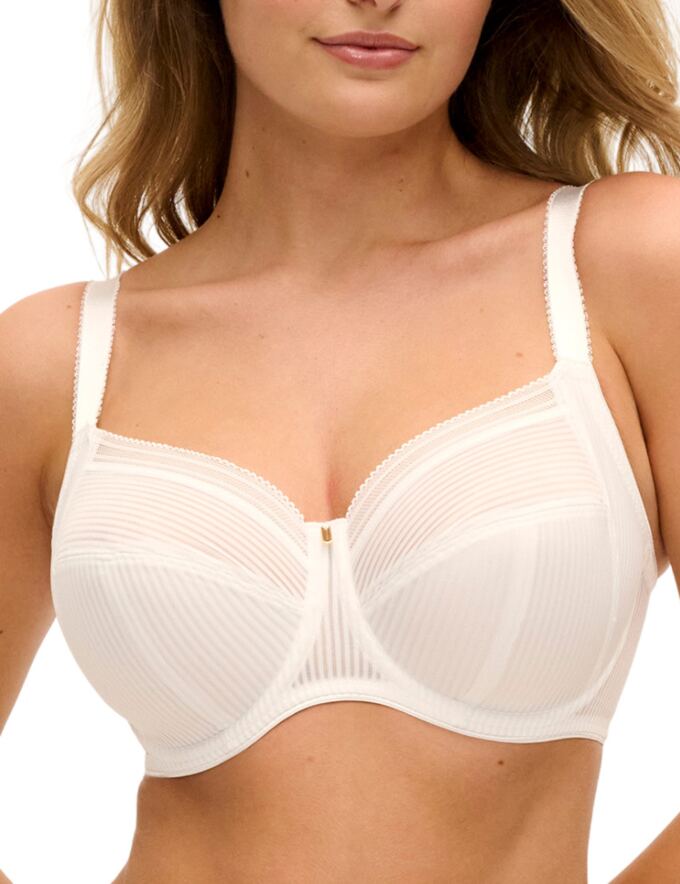
Wide-wired bras
A wider wire reaches further around the ribcage and a wider band spreads the load, so a heavy bust feels held without the band digging in or a bulge forming at the back. Support with a smoother line under a fitted top.
Best for: heavier busts that want firm support without pinching, and a smooth back.
Shop wide-wired bras
Comfort support 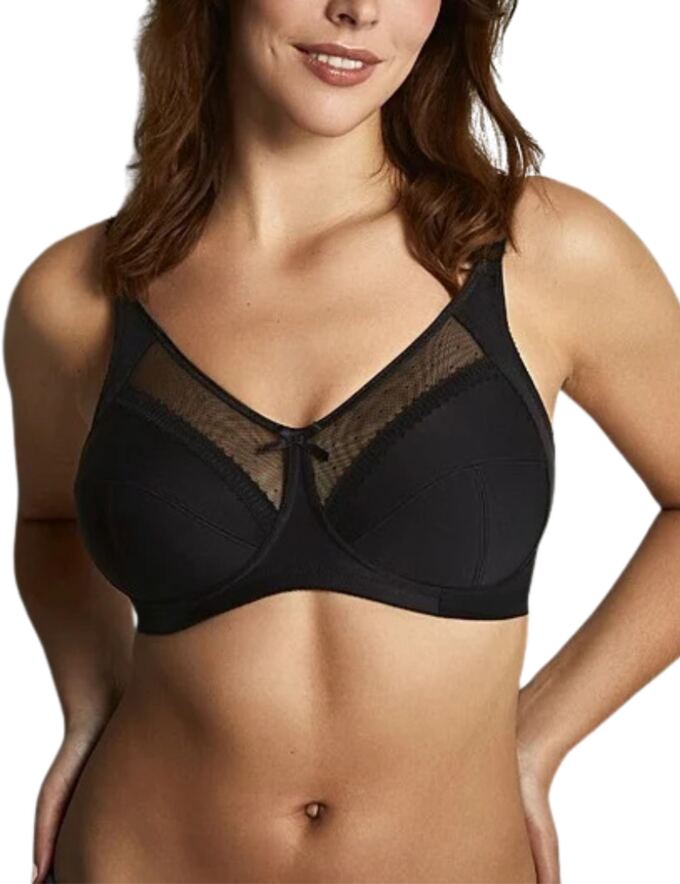
Non-wired and front-fastening
Support does not have to mean wires. A well-built non-wired bra uses firm fabric and a strong band to lift and hold, which suits anyone who finds wires uncomfortable or is recovering from surgery. Royce builds its whole range around exactly this.
Best for: wire-free comfort, sensitive skin and post-surgery, without giving up the hold.
Shop non-wired bras
For running or the gym, none of the above is the answer. High-impact movement needs a dedicated sports bra built to hold a fuller bust still, which is a support job of its own.
The brands that go big on support
Fuller-bust specialists cut and build bras differently from the high street, with the depth and structure a large bust needs rather than a D cup stretched to fit. These carry between them right through the DD to K range, so it is worth browsing by brand once you know your style.
Support on a big bust is a band job, not a strap job. Fix the band and half your bra problems disappear.
Getting the fit right
The often-quoted figure is that most women wear the wrong size, and on a fuller bust the wrong size is the difference between held and hurting. Two quick checks tell you a lot. Run a finger under the band at the back, it should sit level and firm with only a little give, not ride up toward your shoulder blades. Then slip the straps off your shoulders for a moment, a well-fitting band should still hold the bust up on its own. If it drops, the band is too big.
If the cups cut in or your bust spills over the top or the side, the cup is too small rather than the style being wrong, and going up a cup usually solves it. Our fitting guide walks through the full check, and the bra size calculator gives you a starting size in a minute.
Which support do you need?
Tell it your main gripe and it will point you at the style to start with.
Find your support
Choose the closest match.
Pick an option above for a suggestion.
Common support problems, and the fix
- The straps dig in and leave red grooves. The band is taking too little of the weight, usually because it is too big. Drop a band size, take the cup up one, and the shoulders get their relief.
- The band rides up your back. Same cause, a band that is too loose. A firm, level band is the single biggest change you can make to support.
- Your bust spills at the top or the side. The cup is too small, or you need a side-support style to contain it. Go up a cup first.
- The bust drops or bounces through the day. A structured full cup on a firm band lifts and holds it, and for exercise a high-impact sports bra takes over.
A matching brief completes the set once the bra is sorted.
Common questions
What is the most supportive bra for large breasts?
A full-cup bra on a firm, well-fitted band. The band does most of the lifting and the full cup contains the whole bust, so nothing spills and the weight comes off your shoulders. Adding a side-support style helps if your bust is heavy or soft. The right size matters more than any single feature.
What kind of bra is best for heavy breasts?
Look for a structured full cup, a firm band and, ideally, a wider wire or side support to spread the load and stop any bulge. If you cannot wear wires, a well-built non-wired bra from a specialist like Royce gives hold without them. The key in every case is a band that fits firmly.
Which bra is best for sagging and heavy breasts?
A full cup with side support lifts and centres the bust, which is what counters both weight and drop. The lift comes from the correct band size far more than from padding, so getting fitted is the first step. Structured cups from fuller-bust brands hold their shape better than soft, stretchy ones.
How should a supportive bra fit?
The band sits level and firm around your ribcage with only a little give, and holds the bust even with the straps off. The cups contain everything with no spilling or gaping, and the centre sits flat against your breastbone. The straps stay put without carrying the weight or cutting in.