Your bust does a lot of changing over a fairly short stretch, growing through pregnancy, changing again when your milk comes in, then settling once feeding is established. No single bra is going to carry you through all of that, which is why maternity and nursing bras exist and why the timing of when you buy them matters. This guide covers the difference between the two, when to get each, how to choose one that stays comfortable as you change, and what size to buy when your size is a moving target. It is written from a fuller-bust point of view, since that is where the high street tends to run out of options.
The short version
Maternity and nursing, at a glance
The essentials before the detail.
- A maternity bra supports you while pregnant, soft and flexible with room to grow, usually non-wired.
- A nursing bra has cups that drop or unclip one-handed for feeding after the baby arrives.
- Buy maternity when your usual bras start to feel tight, and nursing bras from around 36 weeks.
- Get measured late and allow room, since your size keeps moving. Do not stockpile early.
Maternity or nursing bra, what is the difference?
They do two different jobs at two different stages. A maternity bra is for pregnancy. It is built to support a growing bust comfortably, so it is soft, usually non-wired, with a wide band, stretch in the fabric and often extra rows of hooks to let out as you change. A nursing bra is for after the birth, once you are feeding. Its defining feature is a cup that opens, either dropping down or unclipping at the strap, so you can feed one-handed without taking the bra off. Many bras now do both, which is worth looking for, but the two words describe the two stages.
When to buy each
Timing saves you money, because buying too early means buying again. As a rough guide:
- Maternity bras. Buy your first when your everyday bras start to feel snug, often somewhere in the second trimester, then again if you outgrow them later on. You may go up a band as your ribcage expands and a cup or two as your bust grows.
- Nursing bras. Buy these from around 36 to 38 weeks, so they are ready for when you come home, but not so early that your feeding size has not settled. Getting fitted late in pregnancy gives the best guide to your nursing size.
- Sleep and lounge bras. A soft, wire-free bra to sleep in is worth having for night feeds and for the early weeks when comfort matters most.
How to choose one that lasts
Because your size shifts, the features that matter are the ones that flex with you.
- Soft, non-wired or flexi-wire cups, which stay comfortable as your bust changes and put no pressure on tender tissue.
- A wide, supportive band with extra hooks, so you can loosen or tighten as your ribcage changes rather than rebuying.
- Adjustable, comfortable straps that are wide enough to hold a heavier bust without digging.
- Easy one-handed nursing clips if it is a nursing bra, since you will be opening them a lot, often in the dark.
- Breathable fabric, which helps with the extra warmth of pregnancy and feeding.
Feeding & pregnancy 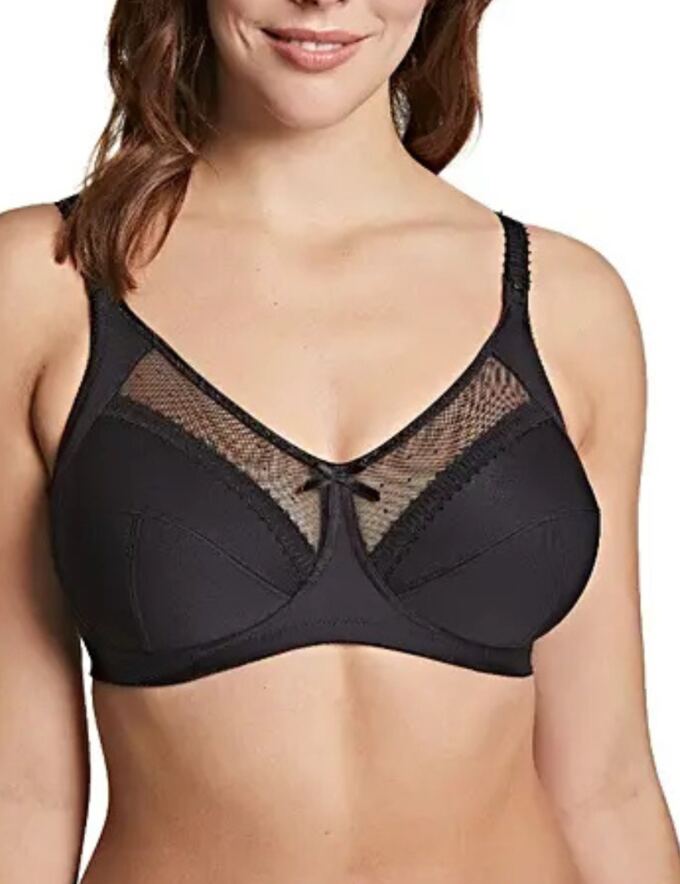
Nursing and maternity bras
The range brings together maternity styles for support through pregnancy and nursing styles with drop or clip-down cups for feeding, in fuller sizes the high street rarely stocks. A good place to find a bra that carries you across both stages.
Best for: support while pregnant and easy one-handed feeding afterwards, in a full size range.
Shop nursing & maternity
Soft comfort 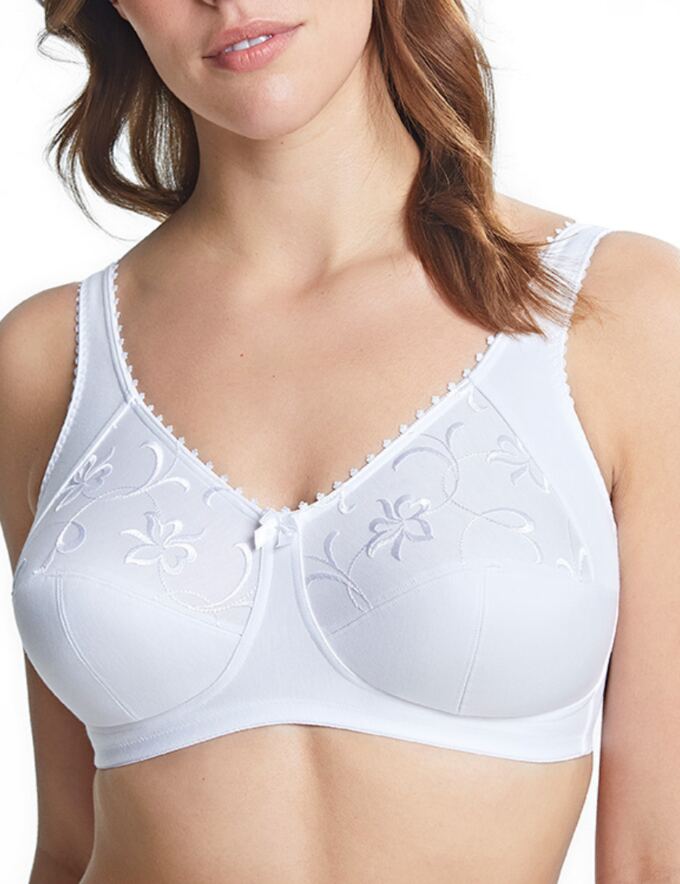
Royce non-wired
Royce builds its whole range around wire-free comfort and soft, supportive fabric, which is exactly what pregnant and feeding bodies want. Good for everyday wear and for sleeping in through the early weeks.
Best for: wire-free everyday and sleep comfort while your body is changing.
Shop Royce
What size when your body is changing
Your size is a moving target through pregnancy and feeding, so the trick is to buy for flex rather than for a fixed number. Get measured later rather than earlier, around 36 to 38 weeks for nursing bras, since that gives the closest guide to your feeding size. Choose a band you can wear on the loosest hook now and tighten later, or one with rows to let out, and expect your size to change again once your milk comes in and settles. If you land between sizes, a sister size, one band up with the cup down or the other way round, gives you the same cup volume with a different band. Above all, do not buy a drawer full early on, because the size you are at 20 weeks is unlikely to be the size you feed at.
Buy for change, not for a number. A little room and a few spare hooks will outlast a bra bought to fit one exact week.
Can you wear underwired bras when pregnant or nursing?
The usual steer is toward non-wired or flexi-wire bras through pregnancy and feeding, and it is sound, but it is about fit rather than a hard rule. A wire only causes a problem if it presses on breast tissue that is changing or filling, which a badly-fitting or too-small wired bra will do. A well-fitting flexible wire that sits on your ribcage and not on the breast is generally fine. The reason non-wired styles are so popular for this stage is simply that they stay comfortable across a shifting size without any of that risk, so they are the easier choice. If you do wear a wire, get the fit checked and switch to soft cups if anything feels tight.
How many do you need?
You need fewer than the lists suggest, and it is better to build up than to stockpile. A workable starting set is around three nursing bras, one on, one in the wash and one spare, plus a soft sleep bra for night feeds. Add more once you know what you reach for. Buying a couple first and topping up means you are not left with a drawer of bras in a size you have moved past.
Which do you need right now?
Tell it where you are and it will point you to the right style.
Find your stage
Choose the closest match.
Pick an option above for a suggestion.
Common questions
Are maternity and nursing bras the same thing?
No, though they overlap. A maternity bra supports a growing bust during pregnancy, with soft, flexible, usually non-wired cups. A nursing bra is for after the birth and has cups that open one-handed for feeding. Some bras are designed to do both, which saves buying twice.
When should you buy a maternity or nursing bra?
Buy your first maternity bra when your usual bras start to feel snug, often in the second trimester, and again if you grow out of it. Buy nursing bras from around 36 to 38 weeks, so they are ready for when you come home but late enough to reflect your feeding size.
Can you wear an underwired bra when pregnant or nursing?
You can, as long as it fits properly, but non-wired or flexi-wire styles are the easier choice. A wire only causes trouble if it presses on changing or filling breast tissue, which a too-small or badly-fitted wired bra does. Soft, wire-free cups stay comfortable across a shifting size, which is why they are recommended for this stage.
What size maternity or nursing bra do you need?
Your size changes through pregnancy and again when your milk comes in, so get measured later rather than earlier, around 36 to 38 weeks for nursing. Choose a band with room to tighten or loosen, and expect to move a band or a cup as you go. A sister size helps if you land between sizes.
How many nursing bras do you need?
Around three is a sensible starting point, one on, one in the wash and one spare, plus a soft bra to sleep in for night feeds. Build up from there once you know which you reach for, rather than buying a large set before your feeding size has settled.
Do you need a maternity bra?
Most people find them worth it. Your ribcage and bust both grow during pregnancy, and a maternity bra is built to support that comfortably in a way an ordinary bra cannot once you have outgrown it. If your bust changes little, you may manage with a soft non-wired everyday bra in the right size, but for most a maternity style is more comfortable.